 |
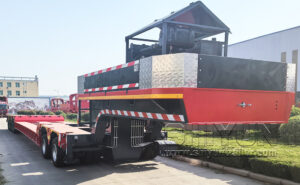
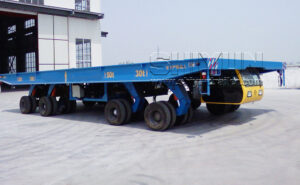
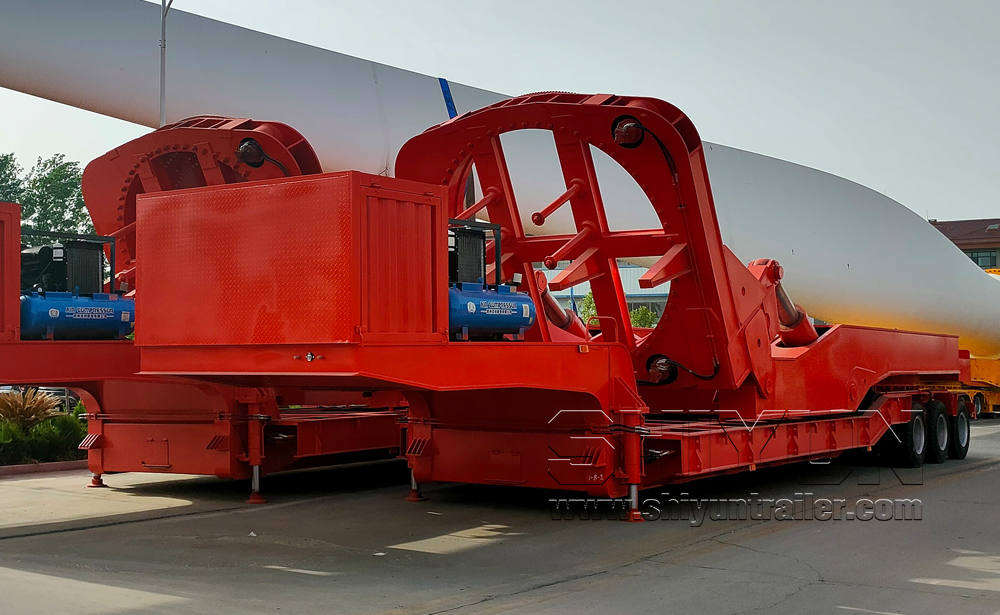
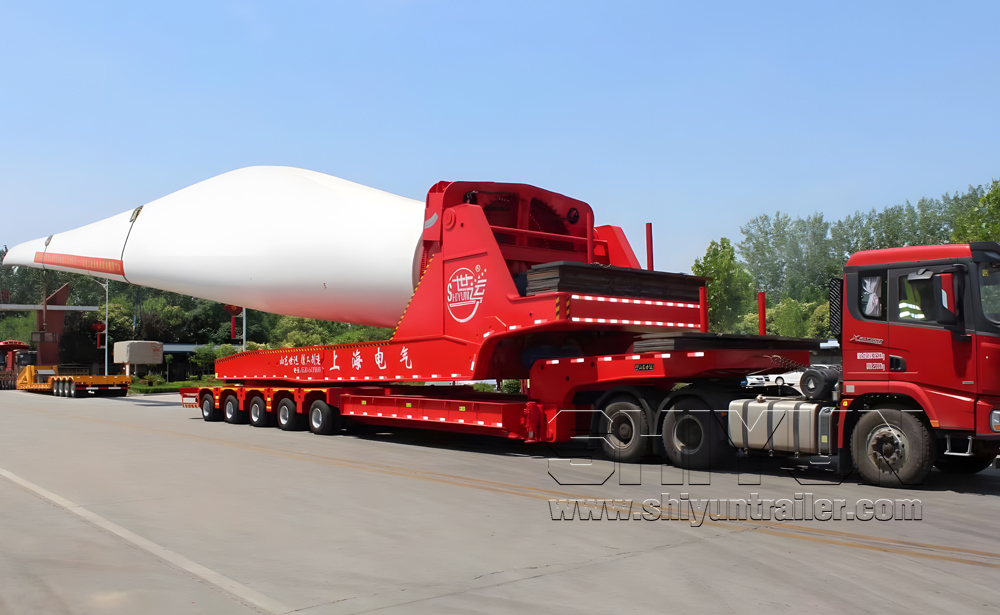
Against the backdrop of wider adoption and massive rollout of wind power generation, SHIYUN, a top-tier manufacturer specializing in wind power transport vehicles, consistently keeps up with industry evolution and keeps upgrading its wind blade transport adapters. Our blade adapters have now been fully updated to the 10th generation. The product lineup has advanced from early low-bed trailers with three lines and six axles to today’s widely adopted multi-axle hydraulic modular trailers. These trailers perform excellently on rough mountain roads, effectively resolving the tough transport hurdles of wind power hardware in mountainous terrain. They help clients capture more market business and steadily fuel the construction of China’s domestic wind power sector.
For twenty years, SHIYUN has focused its business on wind power haulage and delivered all-round support for wind power transport projects. Constant product iteration and technological breakthroughs have brought a transformative improvement to our equipment performance. For over two decades, our premium product quality and comprehensive competitiveness have maintained the leading position within the domestic market.
Going forward, Shandong SHIYUN will stay focused on innovative R&D, continuously renew and optimize custom wind power transport machinery, align its production with world-class advanced standards, commit itself to producing premium wind power transport vehicles, and drive the industry toward high-quality growth and global expansion.
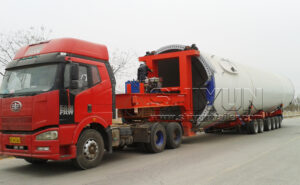
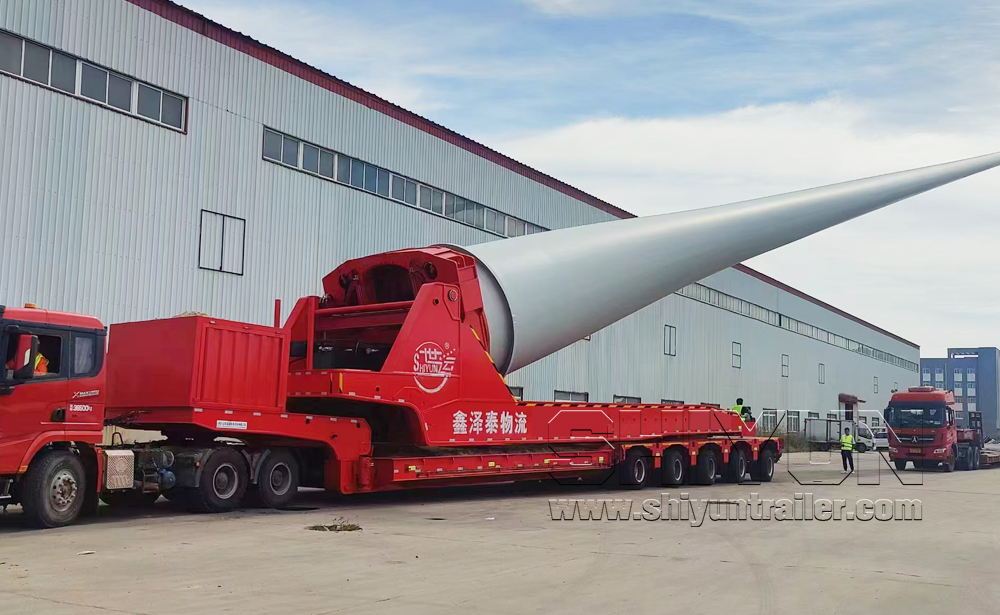
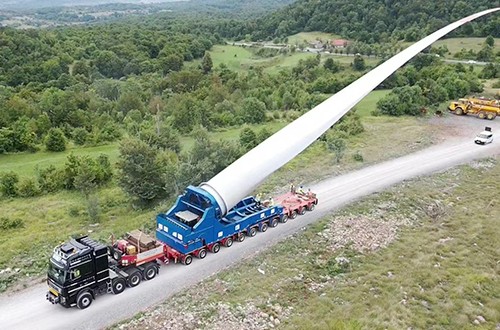
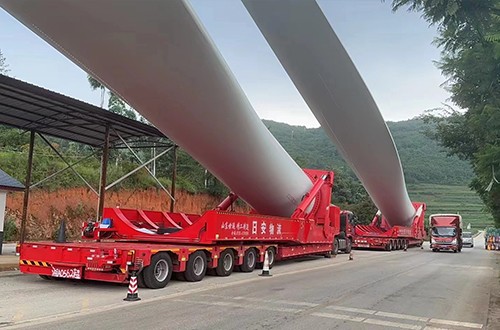
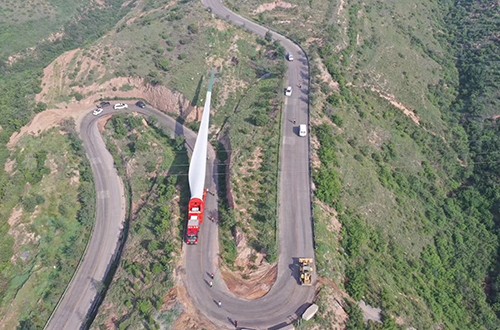
Extended semi-trailers are the standard choice for long-distance haulage of wind turbine blades, while dedicated blade adapters are deployed to deliver these components up to mountain ridge wind farms. When moving blades along public highways, escort vehicles travel at both front and rear to offer full-scale protective supervision. Due to their extraordinary length, many people wonder: why can’t these blades be produced and shipped in separate segments? Furthermore, how do such oversized, ultra-long cargo units navigate sharp bends and safely arrive at mountain-top wind power stations?
Driven by growing power consumption demands, wind turbine blades have grown drastically in size. Early models measured 60 to 70 meters long, whereas modern versions now reach close to 100 meters. Longer blades create wider swept areas and boost power output, yet they also create massive logistical hurdles for transporting these massive components, particularly across rugged mountain landscapes.
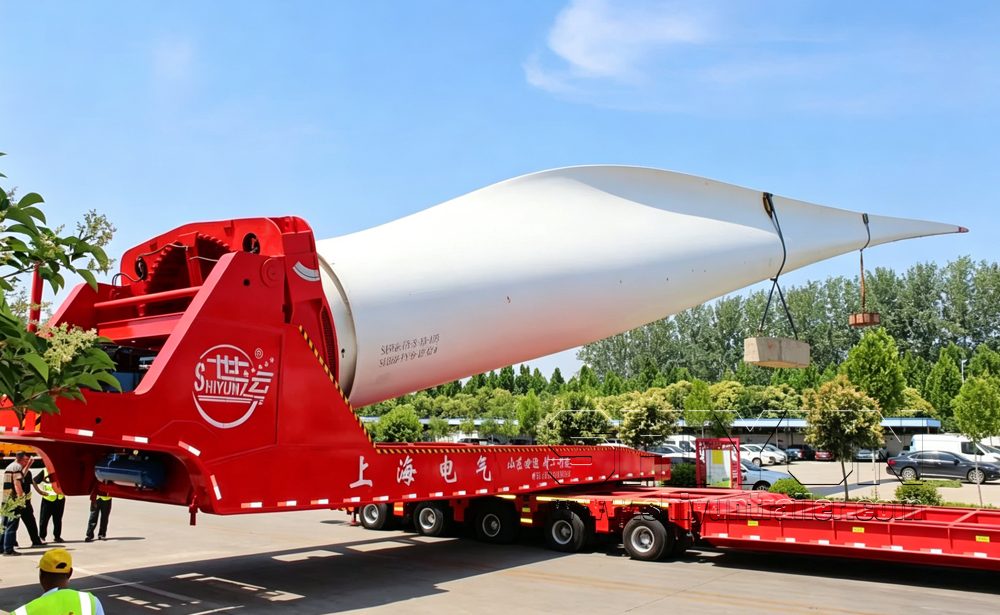
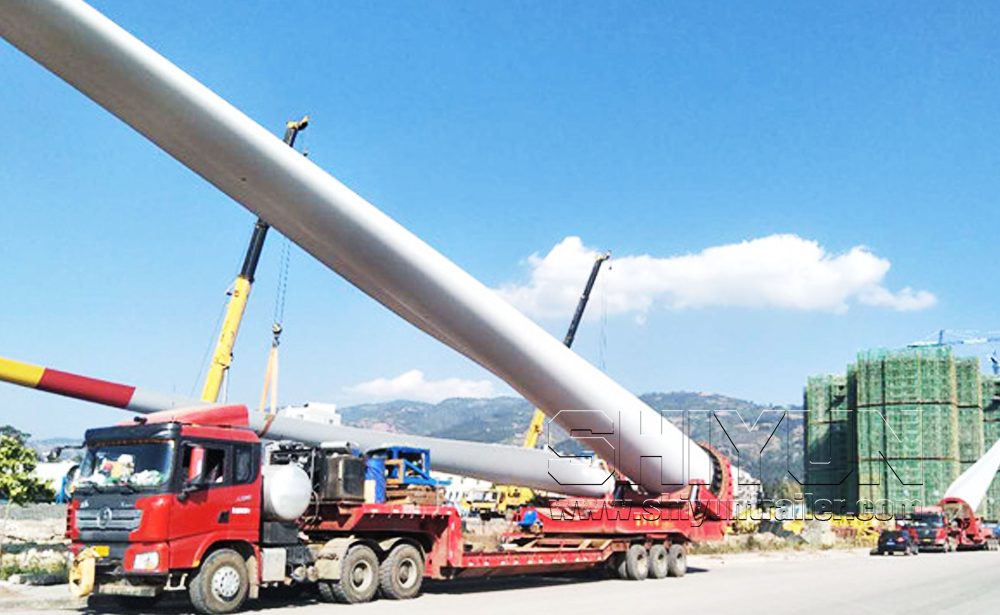
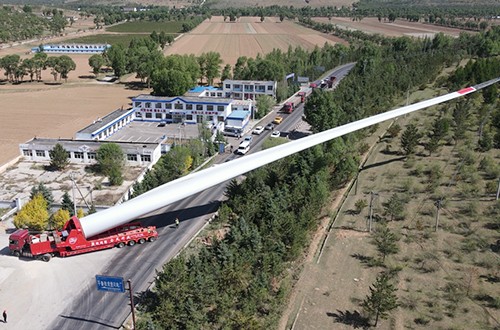
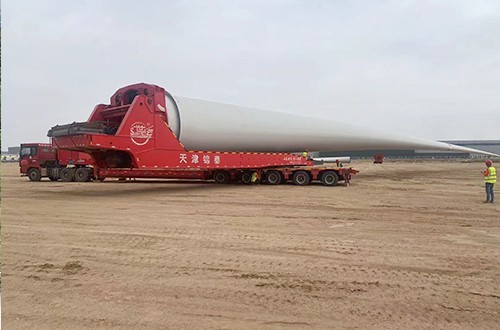
Over 90 meters of each wind turbine blade extend past the trailer body during transit. Even small shifts or steering maneuvers can send the blade’s tail swinging out by 7 to 8 meters. Any minor impact can irreparably damage these high-value components that cost millions of yuan apiece.
Segmented transportation of blades is not feasible. Wind power units require blades to maintain robust integral structural integrity. Split designs would add excess weight, compromise structural stability, and raise risks of cracking or complete breakdown while the turbine is in service.
Three essential prerequisites must be satisfied to guarantee the wind blade transport vehicles can travel safely and smoothly all the way up to mountain-top wind farms:
1st :First, survey the route in advance and remove roadside obstacles.
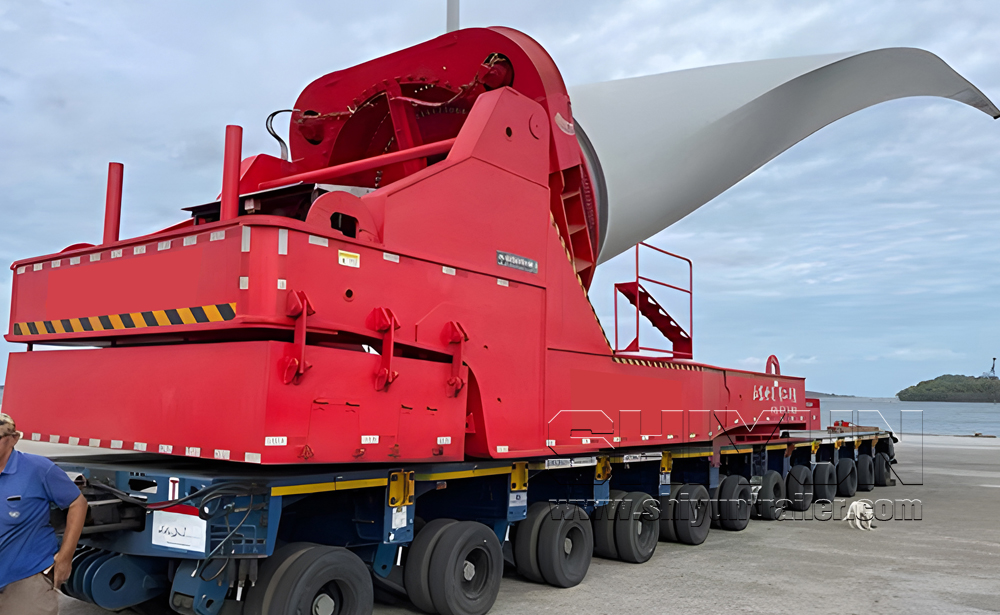
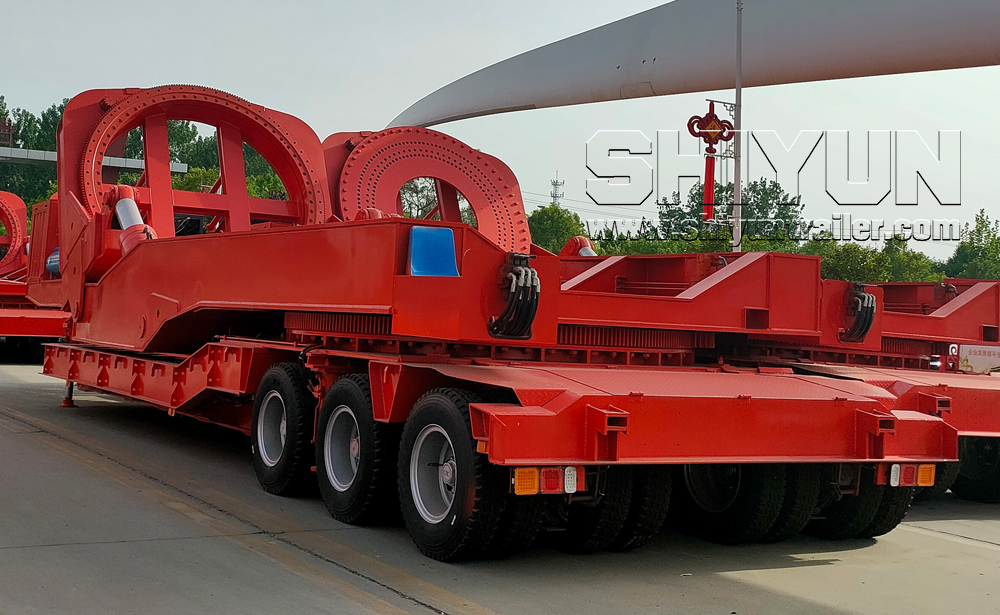
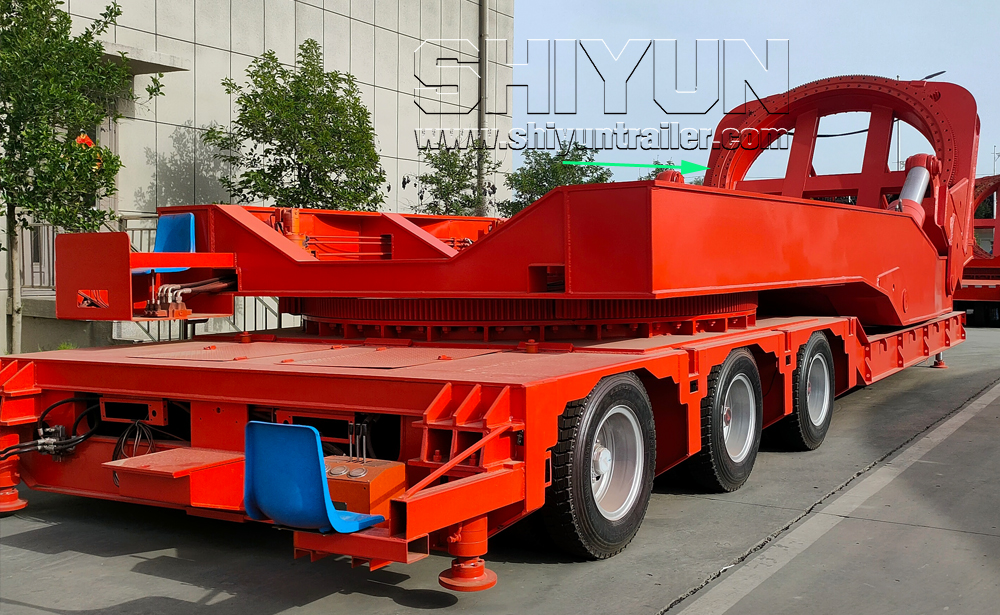
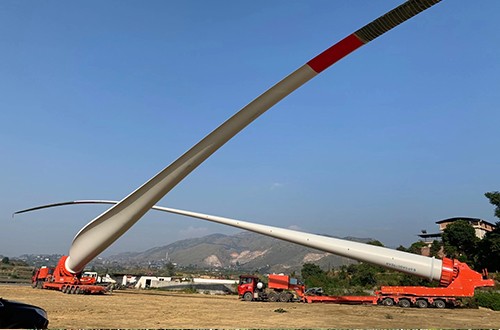
2nd:Special lifting transport vehicle –wind turbine blade adaptor are adopted. The turntable firmly fixes the blade, and the movable frame enables 360° rotation and 60° pitching adjustment to change the height of the blade root and tip for height-limited roads. The tires can also steer and lift to adjust the driving direction flexibly.
3rd:A team of seven to eight staff work together, including drivers, steering operators, slewing turntable operators, commanders and escorts. The suspended dozens-of-ton blade creates strong backward pull, making climbing difficult and causing unstable center of gravity. A loader is required for auxiliary traction throughout the journey.
It is evident that transporting giant wind turbine blades to mountain wind farms is an extremely tough and complex task.
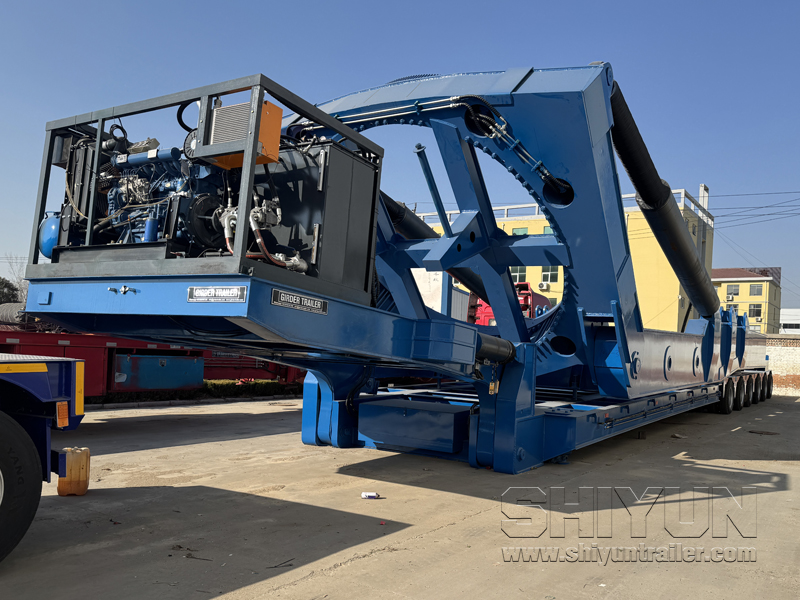
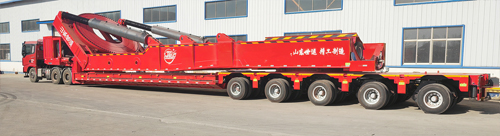
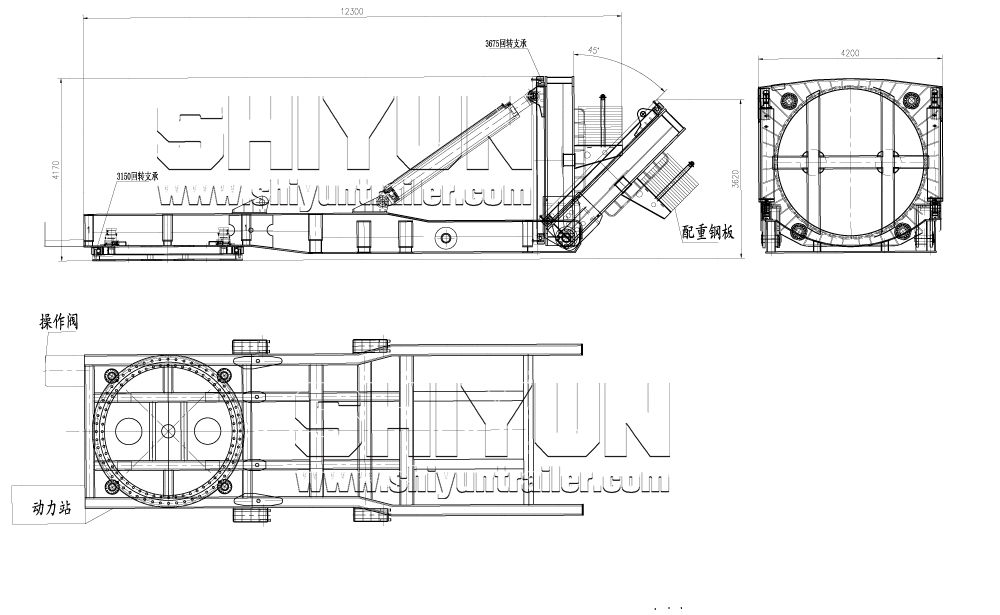
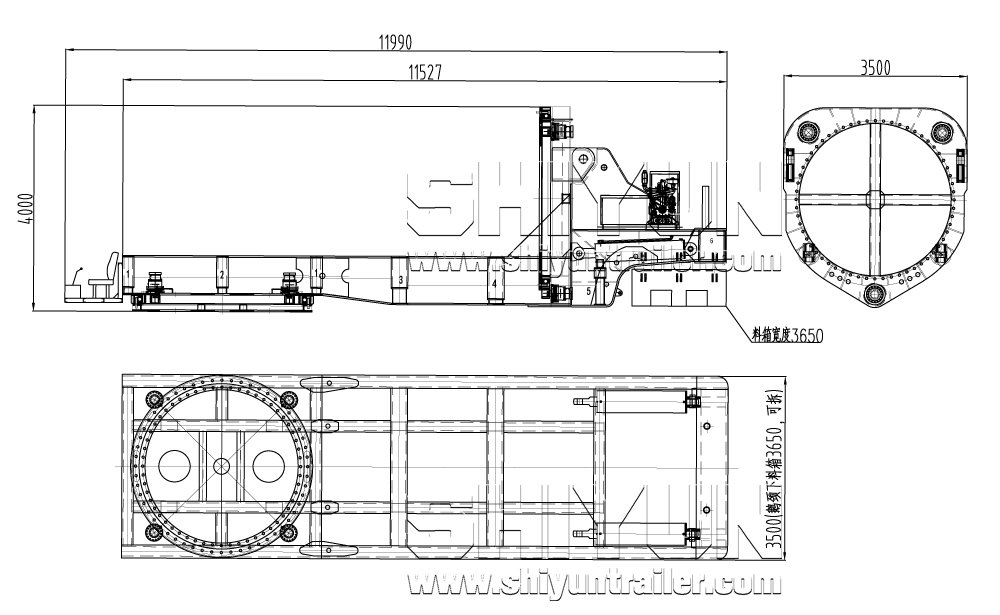
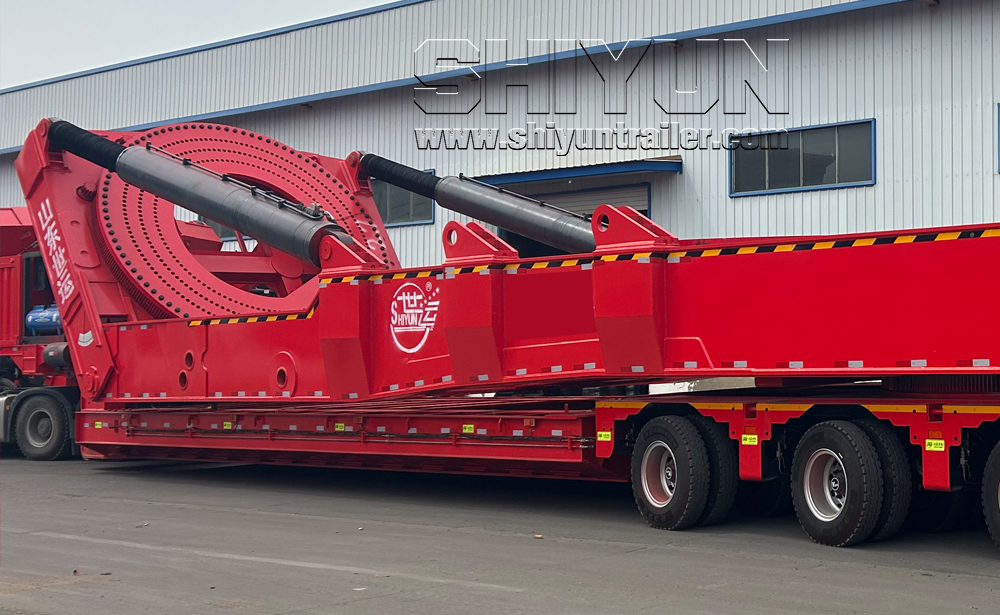
Based on the layout of hydraulic cylinders and the pushing direction of the tooling, SHIYUN wind power transport adaptor is mainly divided into two types: diagonal pulling type and horizontal pushing type.
 |
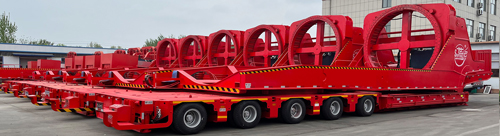 |
| diagonal pulling type wind blade adaptor | horizontal pushing type wind blade adaptor |
 |
 |
| Main Component | ||
| 1 | Bottom Slewing turntable base | For mountain the adaptor on the trailer |
| 2 | Bottom slewing turntable | 0-360° endless |
| 3 | Front slewing turntable | 0-360° endless |
| 4 | Flange connection plate | 2 diameters for the windmill |
| 5 | Fixture | Lifting angle 0-60° |
| 6 | Lifting cylinder | Cylinder diameter over than 320mm |
| 7 | Slewing mechanism | With Motor inside to drive the flange rotating) |
| 8 | Slewing chassis assembly | High strength steel |
| 9 | Power station | with |
| 10 | Operation type | Manual and Wireless remote control |
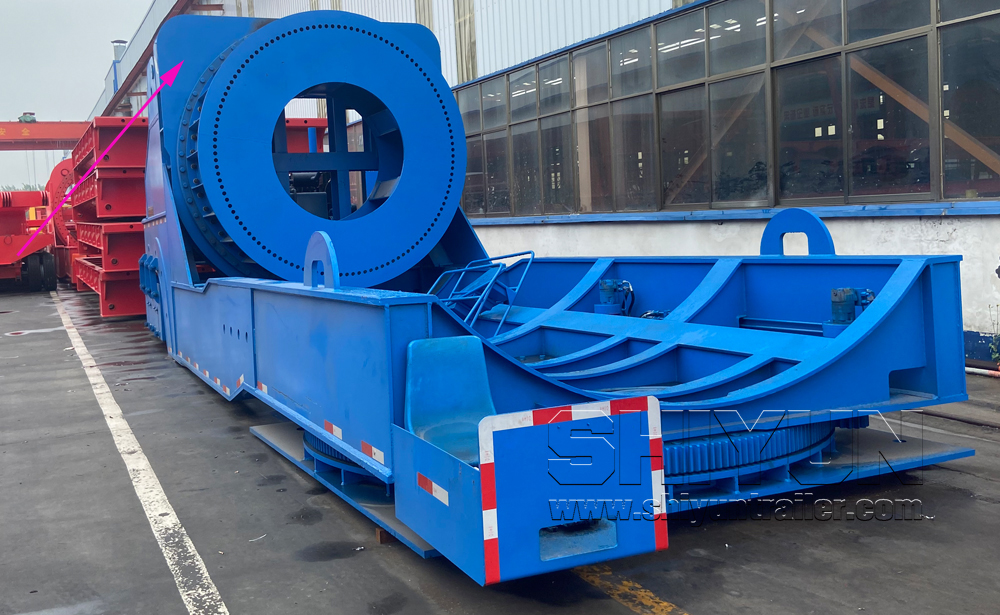
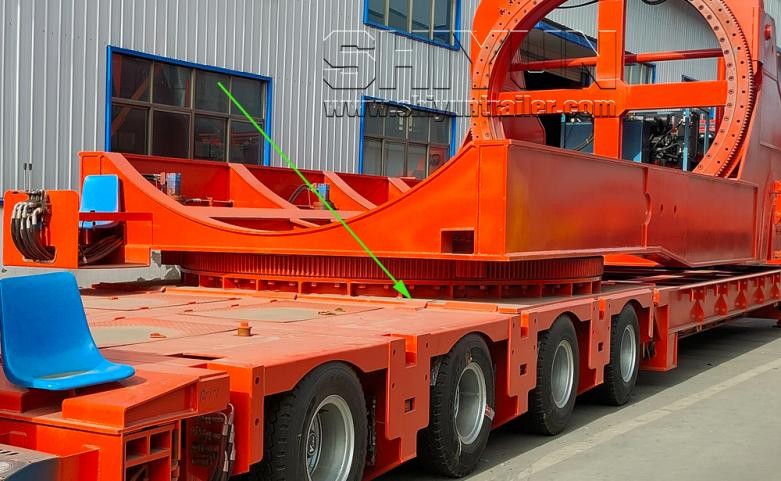
2.1 Bottom slewing turntable base
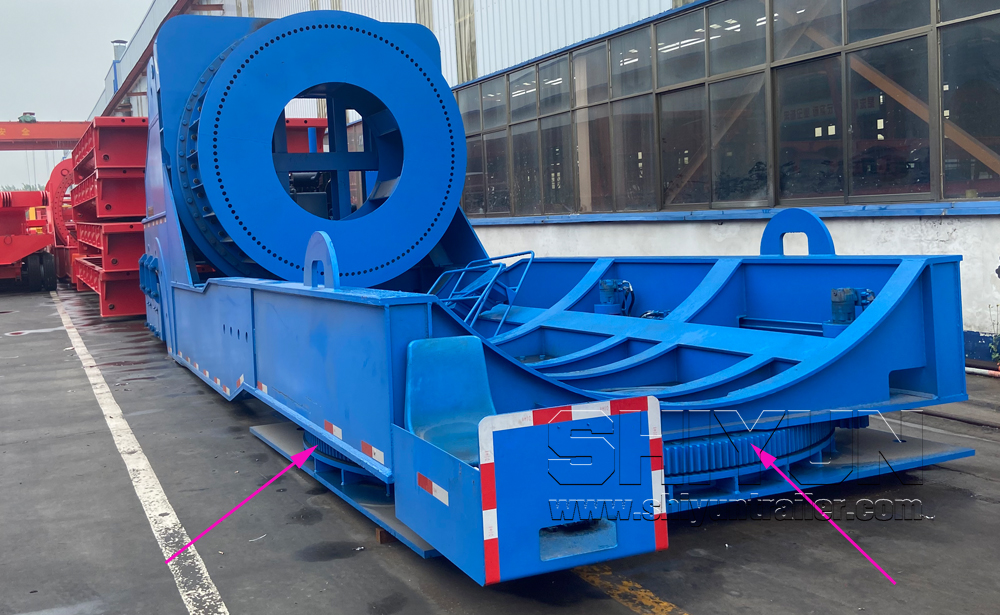
(SHIYUN can weld it onto the vehicle chassis, or supply only the upper structure for customers to weld mounted in their own trailers)The bottom of the slewing bracket is welded with an integral high-strength steel plate. The thicker steel plate is adopted to greatly improve structural rigidity and ensure excellent load capacity and operational stability
 |
 |
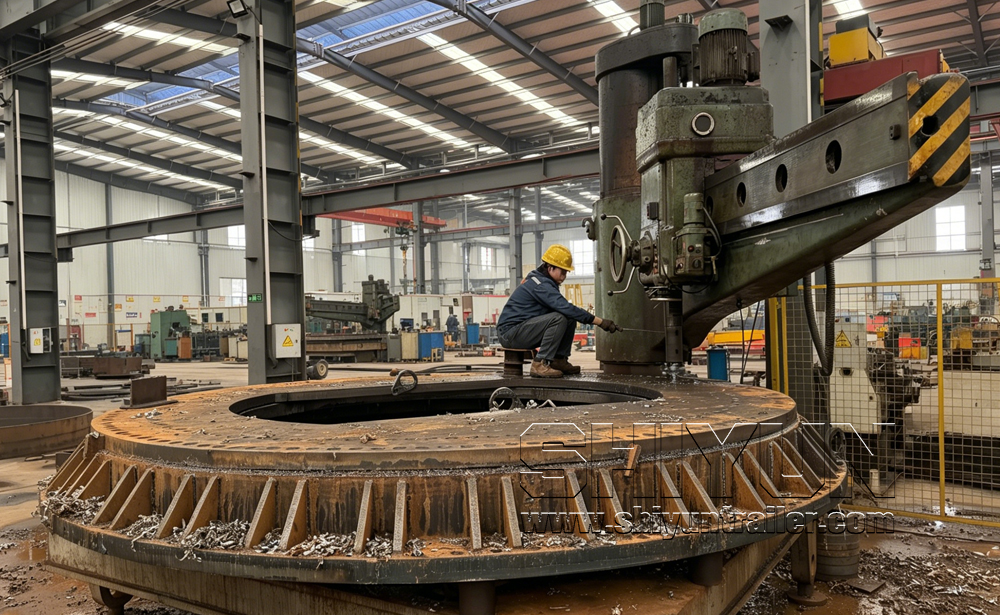
2.2Bottom slewing turntable (360 degree Rotation angle ,3150 outer rotor)
It can adjust its angle flexibly according to the wind direction to reduce wind resistance and maintain stability during transportation.It can maximize vehicle stability, which is critical to transportation safety.Backed by professional design and 20 years of industry experience, SHIYUN ensures the stability and reliability of the 360-degree rotating turntable for wind blade transportation, delivering superior transportation safety performance.
 |
 |
 |
 |
2.3 Front slewing turntable
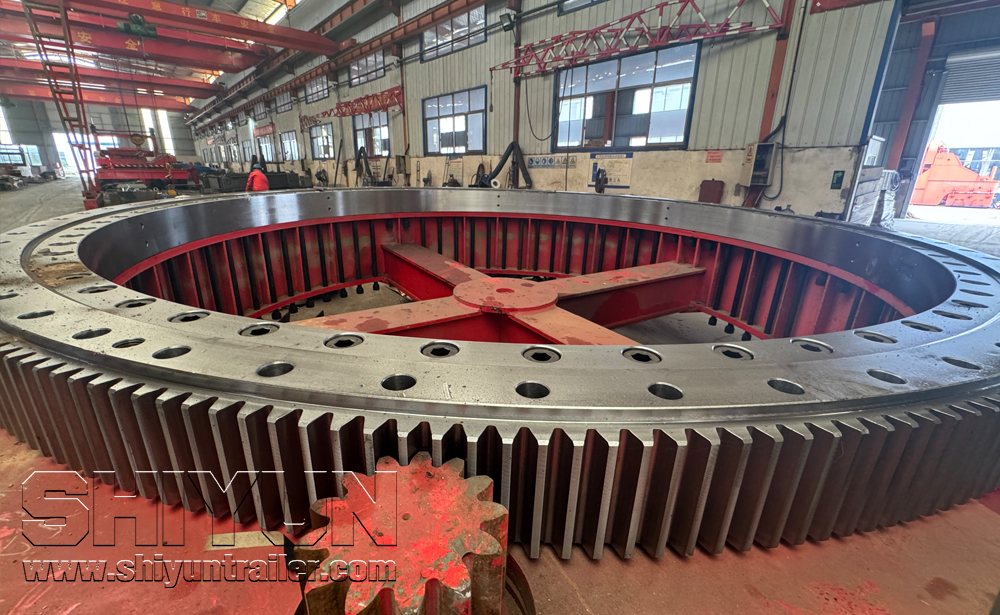
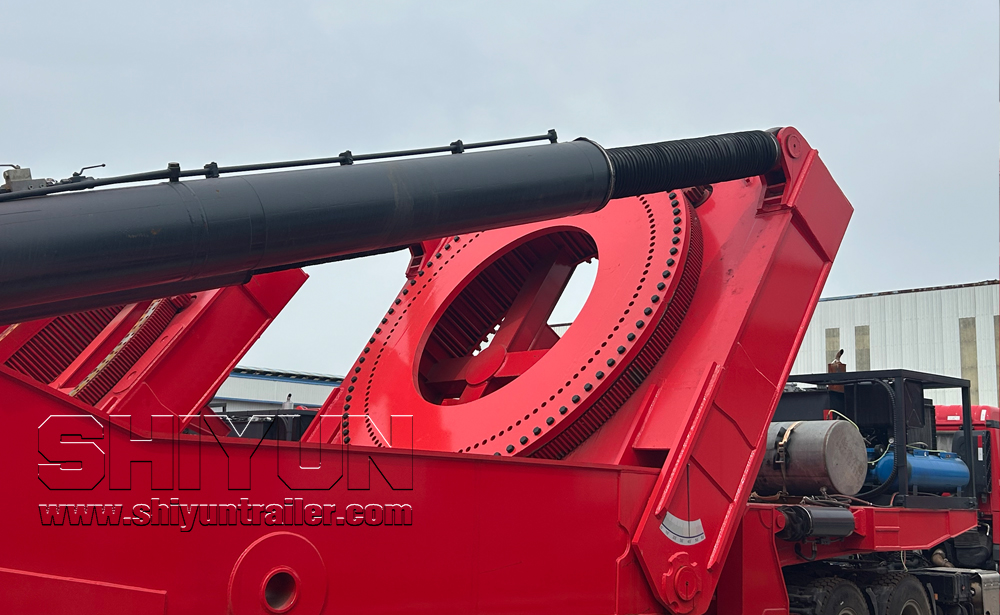
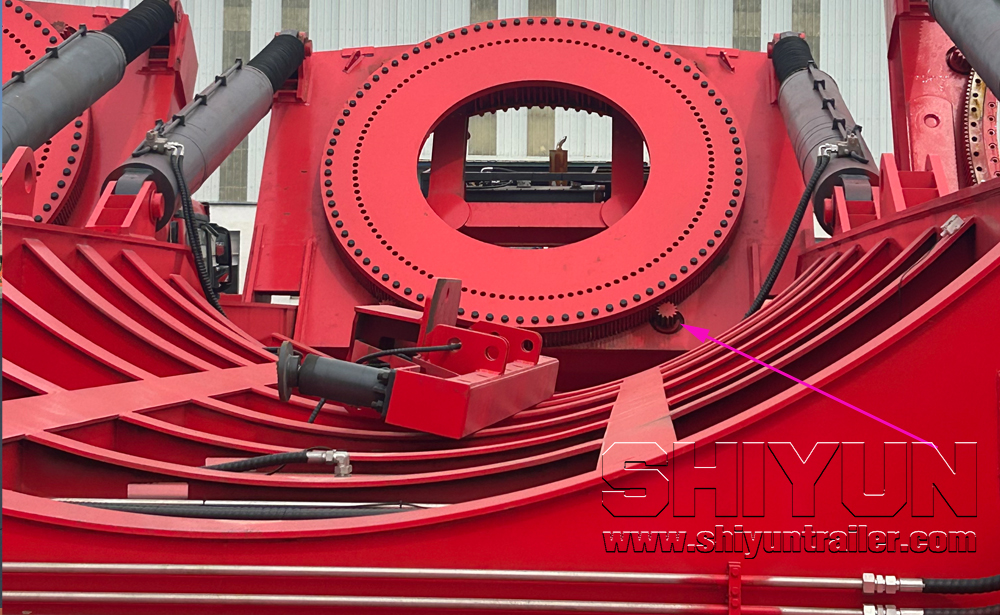
The front slewing turntable of SHIYUN wind blade adaptor features a double-rail structure. The inner rail is fixed to the fixture, while the outer rail can mount the flange for connecting the blade root. Driven by a hydraulic motor, the inner rail connected to the fixture enables 360-degree rotation, ensuring safe transportation of the blades.
 |
 |
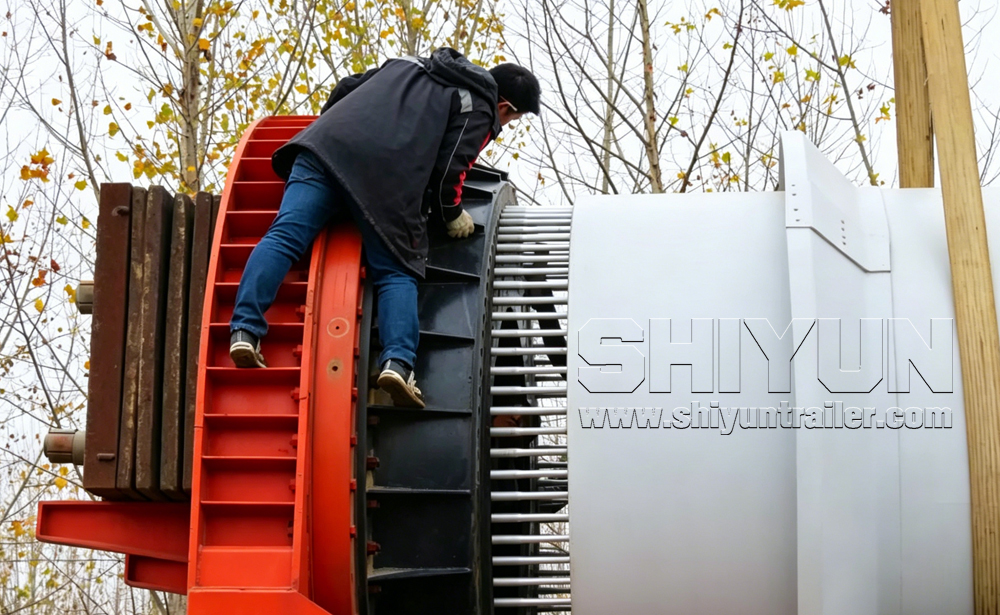
2.4 Flange connection plate(Rotor blade diameter Interchangeable ,double diameters optional ,360 degree variable )
The flange turntable serves as the core connection component for wind turbine blades. Its bolt holes can perfectly match the blade root flange of various wind blades. The flange plate is detachable and replaceable. The rotation and lifting of the flange plate drives the corresponding movement of the blade, making it one of the key load-bearing parts of the wind power transport fixture.
 |
 |
 |
 |
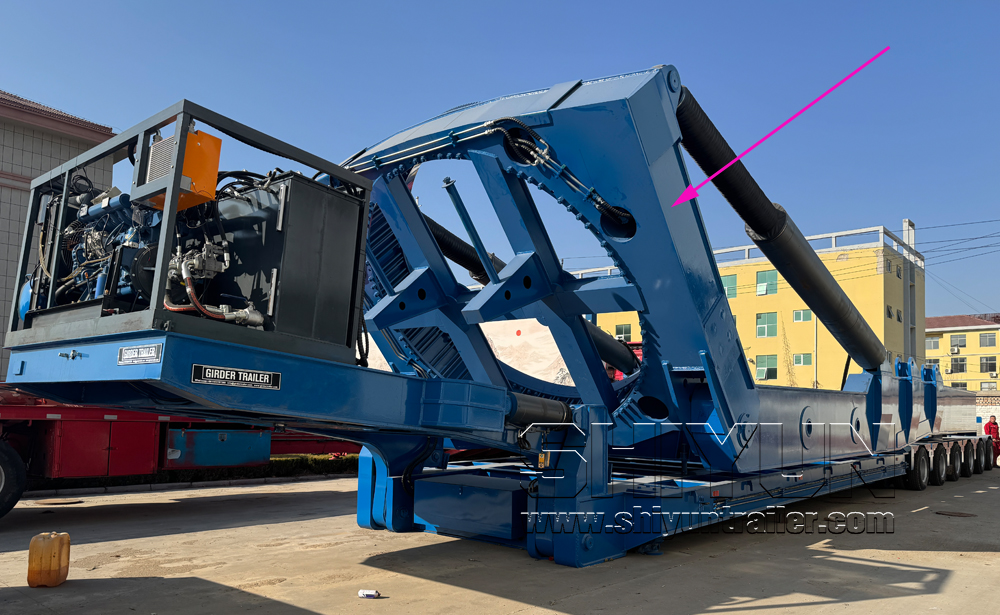
2.5 Fixture(Lifting angle 0-60 degree,3150 outer rotor)
As the core supporting structure for blades on wind power transport equipment, it features a hydraulic lifting function from 0 to 60 degrees. Connected to hydraulic cylinders, it enables flexible adjustment of the blade angle to balance the vehicle’s center of gravity and ensure stable transportation.
 |
 |
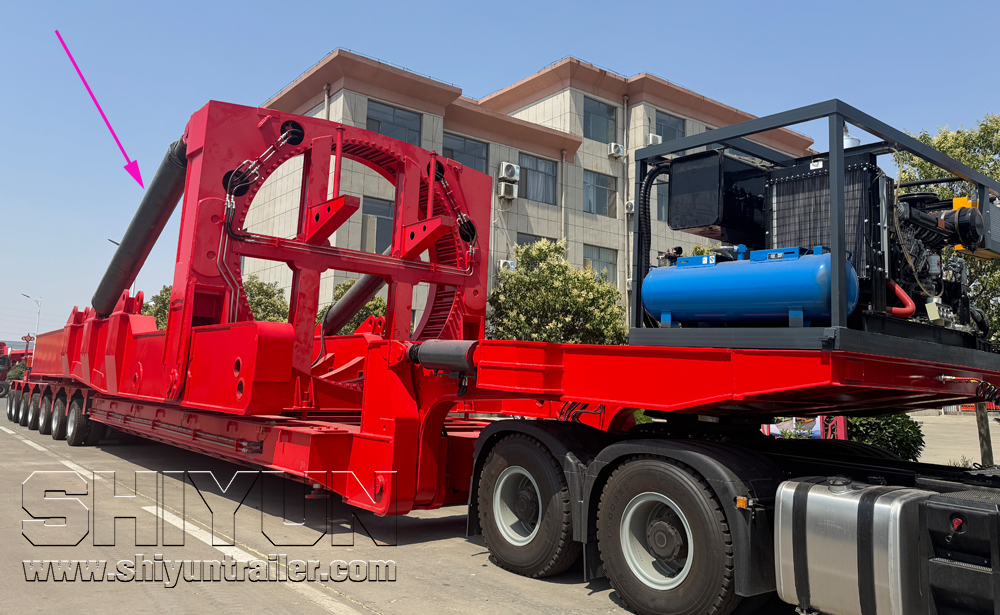
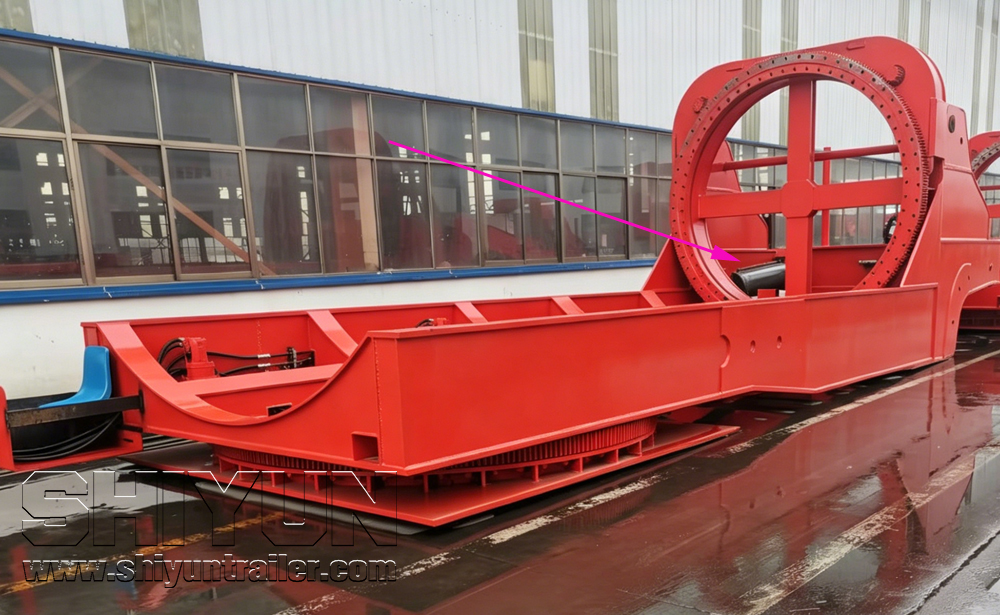
2.6 Lifting cylinder(350 model,2pcs)
The hydraulic cylinder is a key component of the wind blade transport fixture. Cooperating with the flange turntable, it realizes the hydraulic lifting of the blade from 0° to 60°.
When driving on mountain roads and complex routes, it adjusts the blade elevation angle to avoid obstacles effectively. It also balances the vehicle’s center of gravity, greatly improving driving stability and trafficability, which is essential for safe wind blade transportation.
 |
 |
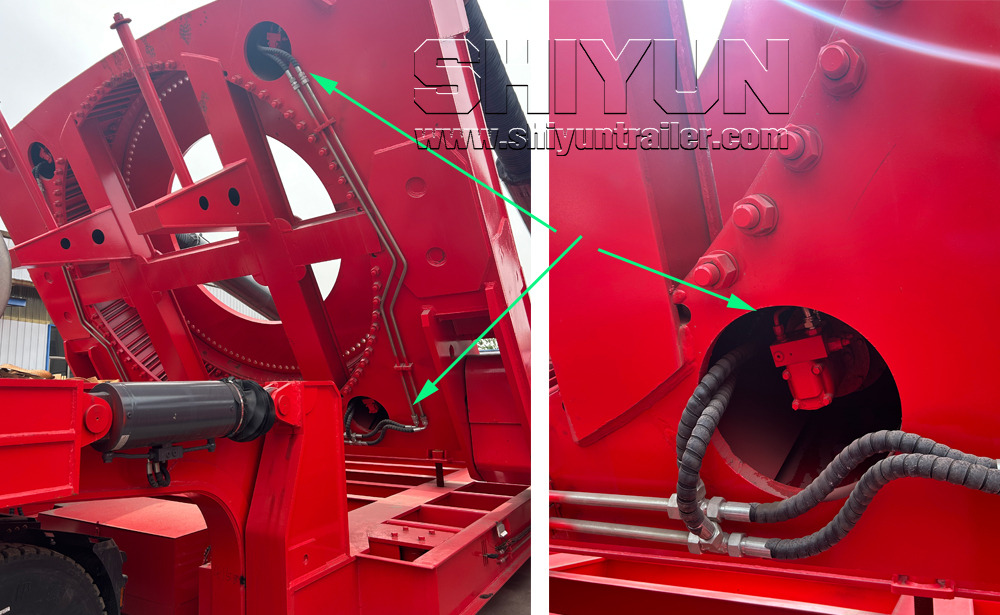
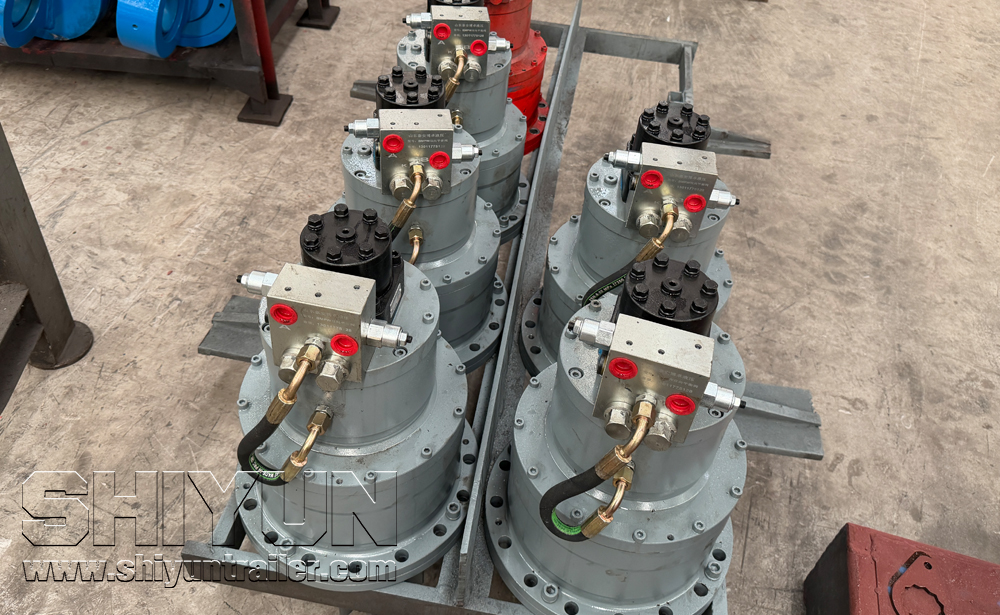
2.7 Slewing mechanism drive system (with Motor inside to drive the flange rotating)
The flange turntable (360° slewing bearing) of the wind power transport fixture rotates via a hydraulic drive system + heavy-duty slewing bearing + gear transmission.
 |
 |
|
 |
2.8 Slewing chassis assembly
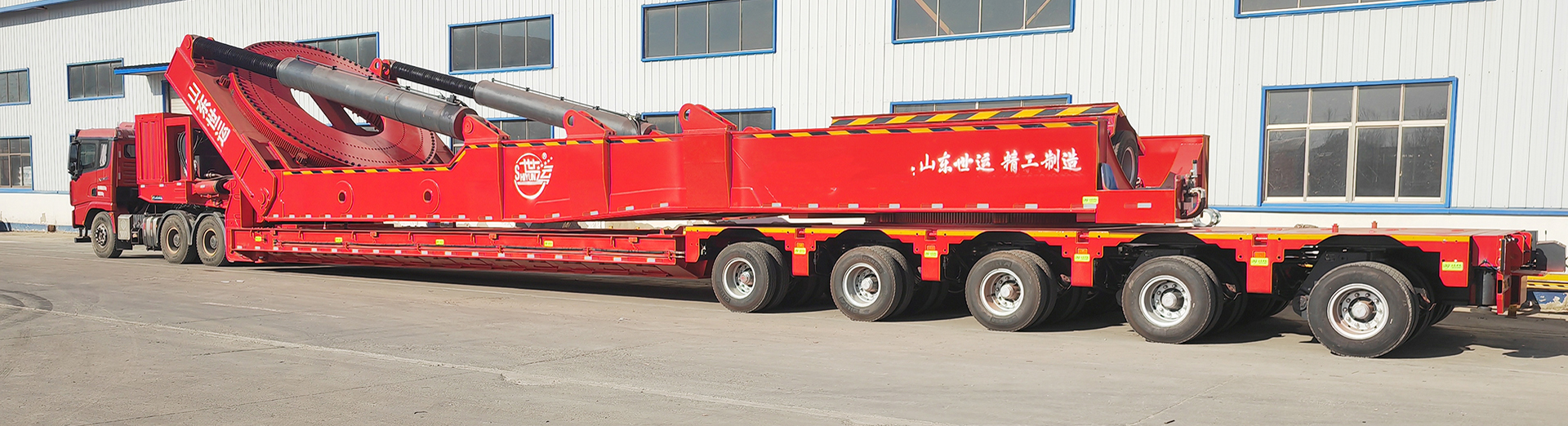
This is the main structure and basic frame of the blade fixture. Mounted on the lower turntable, the frame can rotate synchronously with it. Hydraulic cylinders are installed at the front to support and lift the blade. The entire structure is made of high-strength steel, featuring thick plates, strong load capacity, and excellent durability.
 |
2.9 Power station
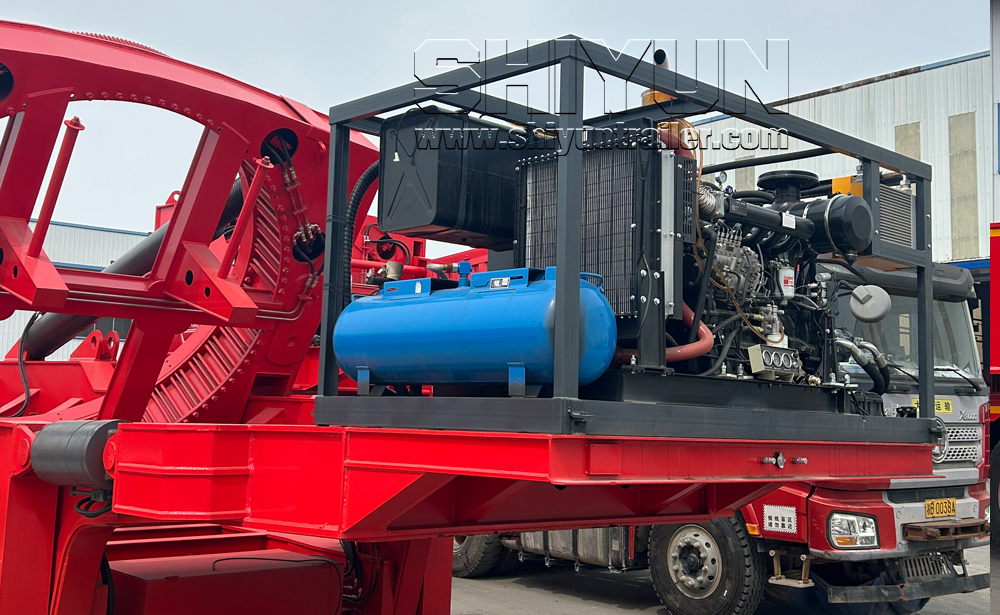
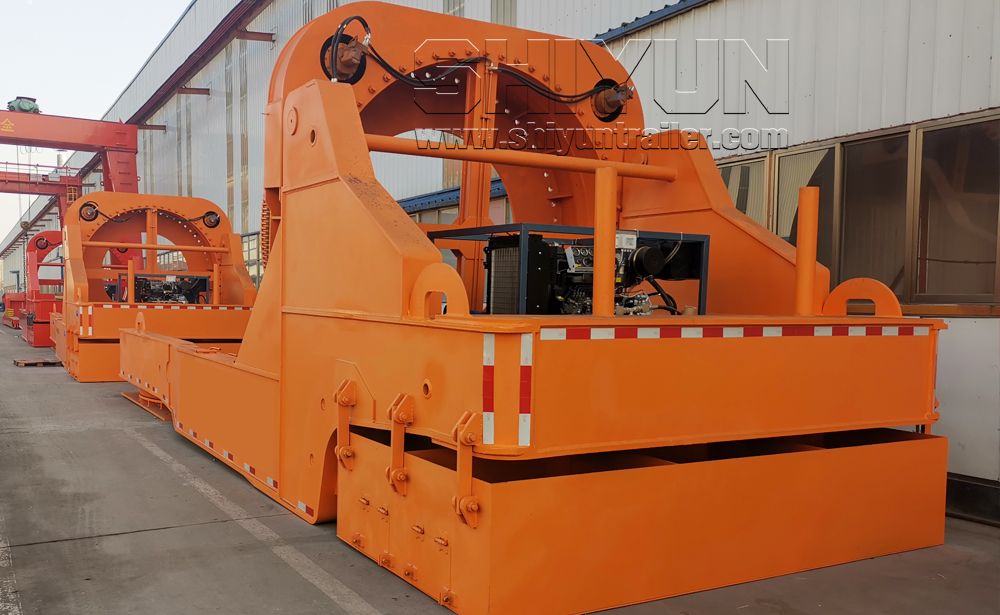
This wind power blade adaptor is equipped with an integrated power pack unit, which consists of a diesel engine, hydraulic pump and oil tank. It provides power for the whole vehicle hydraulic system and drives the hydraulic motors to operate.
 |
 |
2.10 Operation box (Manual and Wireless remote control)
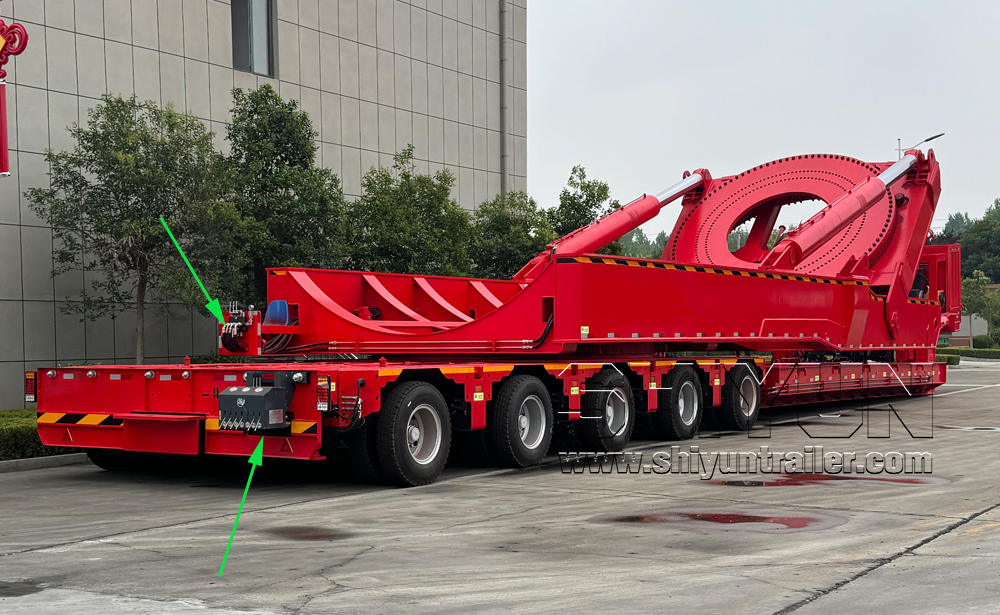
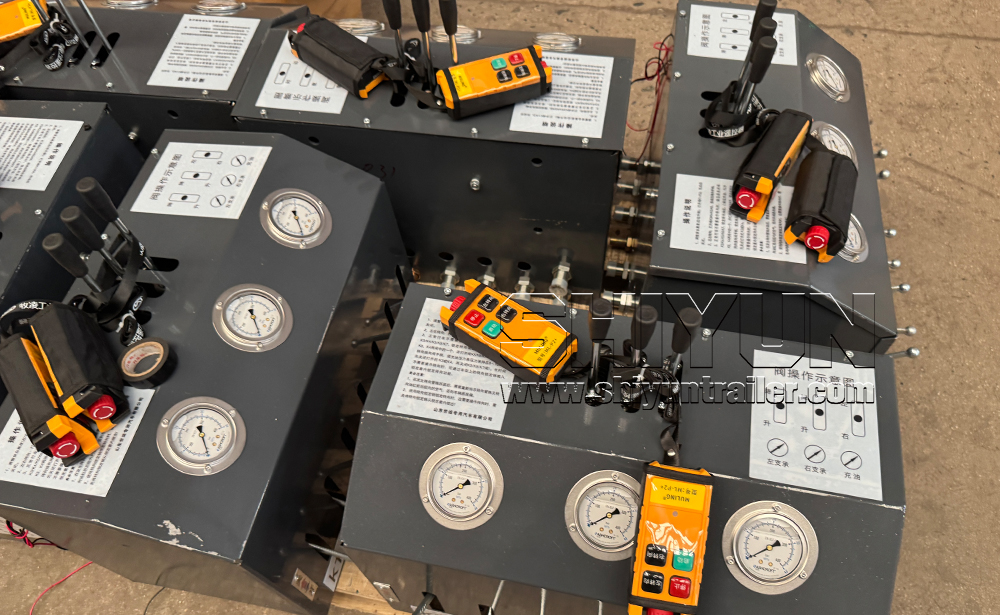
The control system is equipped with two independent valve operation boxes. One is mounted on the main equipment, and the other is dedicated for the hydraulic modular vehicle. It supports both manual on-site operation and wireless remote control, delivering simple, convenient and highly efficient operation.
 |
 |
2.11 Others:
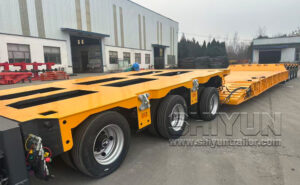
According to the length and weight of wind turbine blades, we adopt different size adaptor, matched with corresponding low-bed semi-trailers or hydraulic modular trailers.
Counterweights can be equipped during operation. Both low-bed semi-trailers and hydraulic modular trailers are equipped with hydraulically lift goosenecks and hydraulically steering fifth wheels, realizing heavy-duty transportation of wind turbine blades.
 |
 |
 |
 |
 |
 |